#2 The Kindness Rule
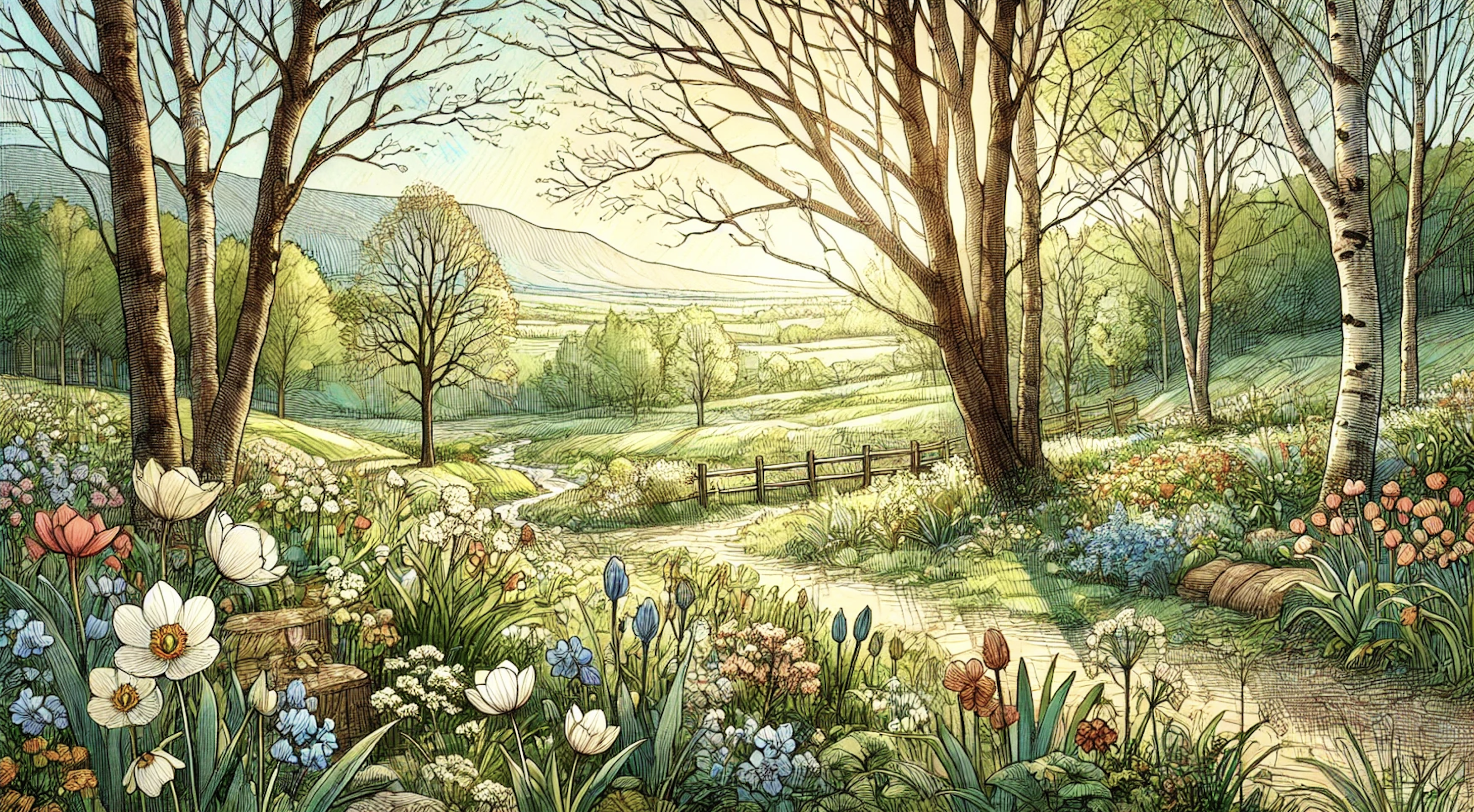
It was a bright spring morning in Mossywood Forest, which is the kind of morning that makes you feel like doing something, without being entirely clear on what.
Klaus and Ole were sitting on their favourite rock beneath a cherry tree, watching their fellow cats go about their day.
There was plenty to watch. Mittens had shared her sunny spot with a cold-looking kitten, which was kind. Old Gregor had knocked over Whiskers’ carefully sorted fish pile and kept walking, which was not. Two kittens were arguing loudly over a pine cone that neither of them had actually wanted until the other one picked it up.
Klaus watched all of this with the expression of someone doing arithmetic in their head.
“Ole,” he said. “What if everyone was just a little kinder?”
“I think most things would improve,” said Ole.
“So what if we made it a rule?”
Ole opened his mouth, closed it, and then said: “A rule about kindness.”
“Yes!”
“I love it,” said Ole.
They were both off the rock before the conversation was technically finished.
Mayor Whiskerton heard them out from behind a very large desk, his eyes half-closed in a way that suggested either deep thought or sleep. He was an extremely old cat who had governed Mossywood for so long that he’d stopped counting the years and started counting the headaches instead.
He raised one paw. “Let it be known that from this day, all cats of Mossywood are required by law to be kind.” A pause. “I have a feeling about this.”
“A good feeling?” asked Klaus.
“A feeling,” said the mayor.
At first, it was wonderful. Kittens were groomed. Sunny spots were shared. Even old Gregor, who had been in a bad mood since approximately 1987, held a door open for someone and looked briefly confused by the experience.
Klaus and Ole walked through the forest feeling warm all over.
Then, after about a week, things began to go sideways.
Kindness had always been a quiet thing in Mossywood. Now that it was the law, it became something louder. Saying thank you turned into a small ceremony. Apologies came with speeches. Compliments arrived in groups and kept going long after everyone wanted them to stop.
Ole baked a fish pie. He was, and there is no gentle way to say this, a poor baker. The pie tasted of effort and very little else. Under normal circumstances this would have been handled with honesty and minimal suffering. Instead, nine cats told Ole it was the best pie they’d ever eaten, one cat asked for the recipe, and Ole beamed and promised to bake more.
Klaus sat very still. Is this kindness? he thought. Or is it kindness’s clothes, with something else wearing them?
“We need to fix it,” said Ole.
“Agreed,” said Klaus. “What if we rewarded kindness instead of requiring it? A token — a golden leaf — for every kind act. Exchangeable for treats. Soft bedding. The good sunny spot.”
Ole’s eyes lit up. “That’s brilliant.”
It was, for about four days.
Then the cats of Mossywood, who were clever in the particular way that cats are clever, began to notice that a kind act performed while someone was watching earned a leaf, and a kind act performed when nobody was looking earned nothing. The logical conclusion arrived quickly.
Klaus watched Pebble pretend to trip so that Nora could help her up and collect a leaf for it. He watched two kittens argue over who got to hold the door open. He watched a cat spend a long moment considering whether to help someone, notice there was no witness, and walk on.
He sat down on the nearest rock and stared at nothing for a while.
They went back to the mayor, who listened and said only: “Take away the rule. Take away the leaves. See what’s left.”
So they did. The forest went quiet. Cats moved through it carefully, like creatures relearning something they’d half-forgotten.
Then one morning, Klaus and Ole found themselves back on their favourite rock beneath the cherry tree. Mittens shared her sunny spot with a cold-looking kitten. Old Gregor knocked over someone’s fish pile and kept walking. Two kittens argued over a pine cone. Barnabus hummed cheerfully to himself for no particular reason and gave a passing stranger half his lunch.
The forest was exactly as it had always been — a little kind, a little unkind, and entirely itself.
Klaus took a long, slow breath.
“I missed this,” he said.
“Me too,” said Ole.
They sat in comfortable silence for a while, watching nothing in particular, which was, after everything, a very pleasant thing to do.